
©Monastere De Saorge Merveilleux

A visit suspended between past and present at the Monastère de Saorge

A suspended visit between past and present at the Monastère de Saorge

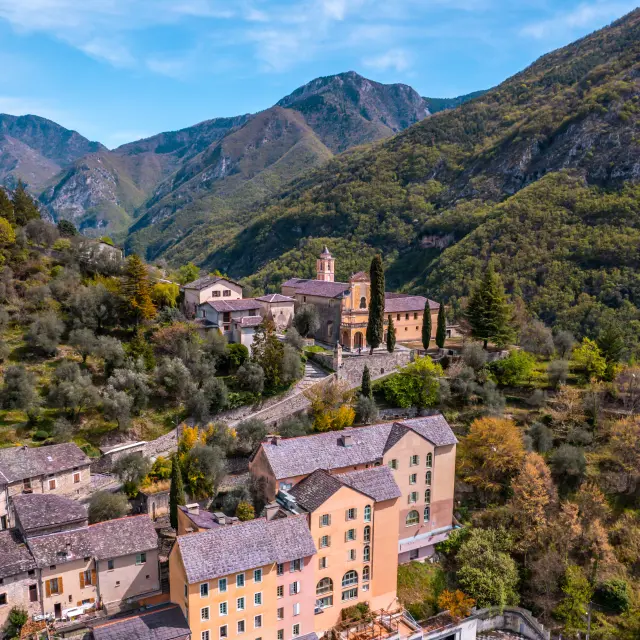
Discovering France’s heritage can sometimes be like taking a trip out of time! The road climbs, clinging to the mountain, playing with the void above the Roya. One bend after another, the valley becomes more and more spectacular. And then, suddenly, the village of Saorge appears, suspended between sky and river. What’s your first impression? Wow, of course. The houses seem to climb the cliffs, the narrow streets wind their way upwards, the silence is king. What a delightful sensation to have left the modern world just a few kilometres below!

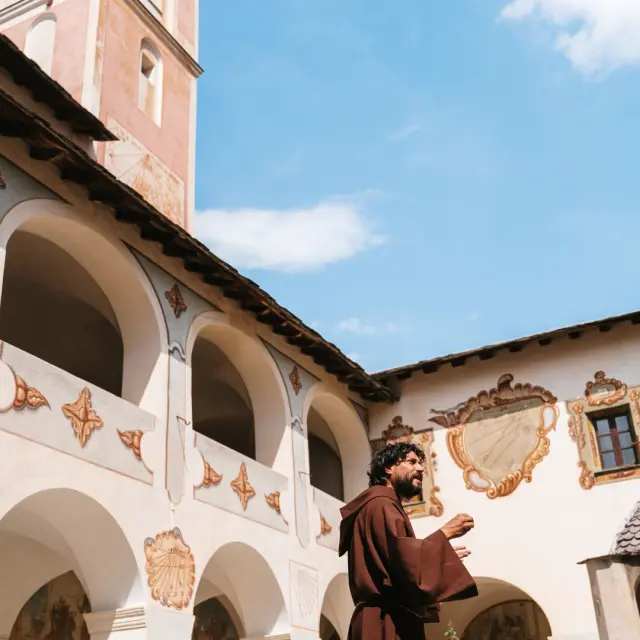
Francisco, a Franciscan friar at the Monastery of Saorge, tells you all about this mythical place.

Marvellous IconMarvellous Icon
©Marvellous Icon

Saorge, a village between the sky and the Roya river

What a tightrope walker this village of Saorge is! The pastel-coloured houses cling to the terraces, huddled together as if in defiance of the void. The cobbled streets climb, winding under vaulted porches, leading to steep staircases where you catch your breath… before it’s cut short again by the scenery of the valley.

Below you, the Roya rolls out its ribbon of white water. A touch of movement in this mineral world. Around the village of Saorge, the footpaths wind their way up to the crests of the mountains and into the nearby Mercantour National Park. Here, the mountain is everywhere: in the stone of the facades, in the light that cuts through the volumes, in the cool shade of the narrow passages.

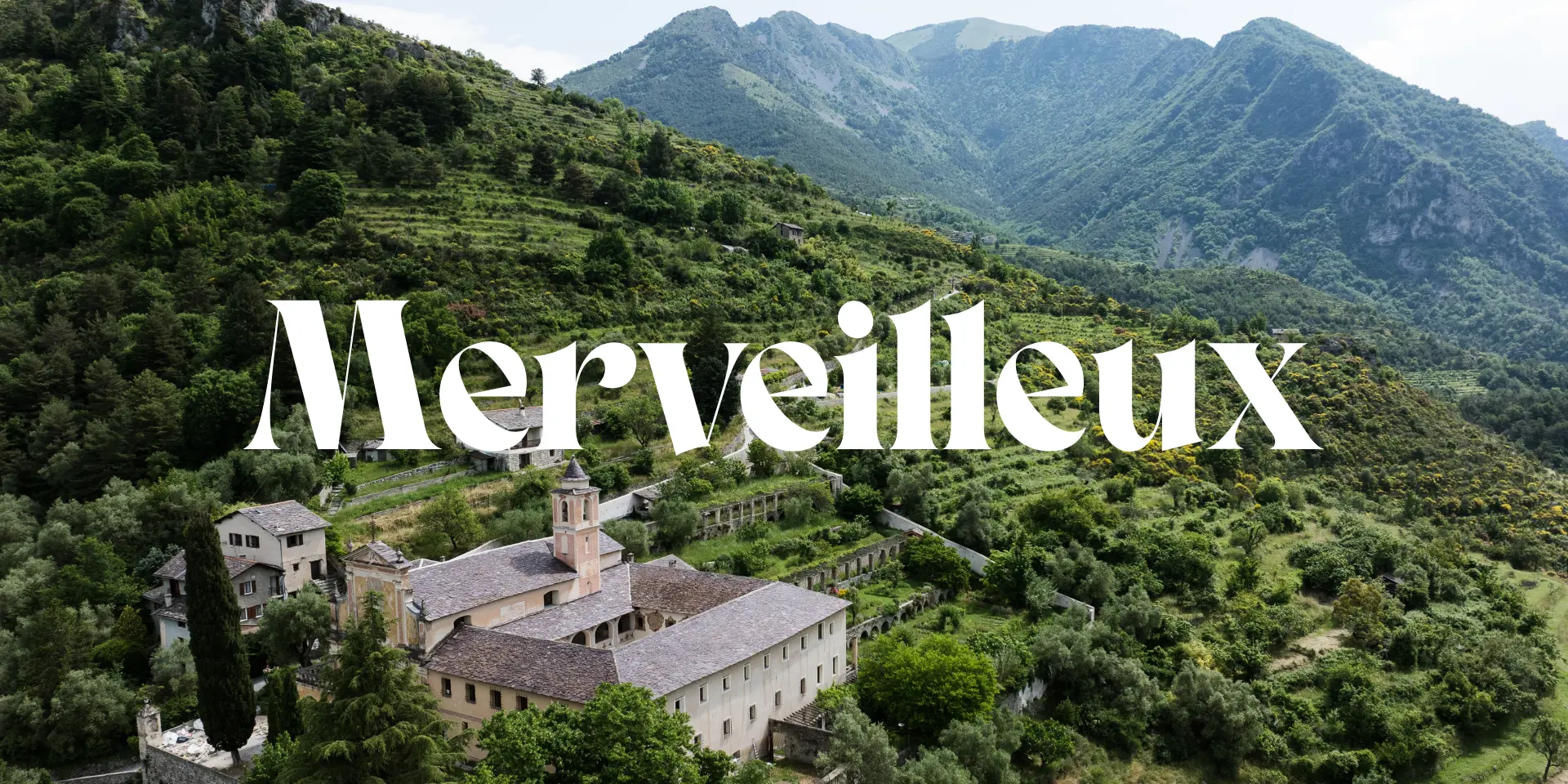
The contrast is permanent, rock and vegetation, spectacular verticality and almost meditative calm. Up there, perched on its spur, is one of the most beautiful historic monuments on the Côte d’Azur: the Saorge monastery. Both rooted in the mountain and open to the horizon, it stands as a link between nature and spirituality, between the power of the landscape and inner silence. Let’s go and meet it together.
The cloister and the cells

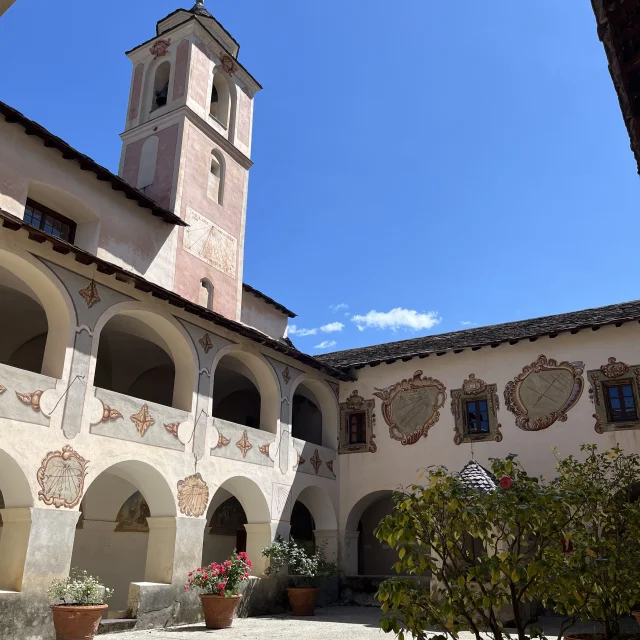
The cloister is the beating heart of the monastery. Community life is organised around it. In the centre, the eye is naturally drawn to the façades. Window frames, the Franciscan coat of arms, painted decorations… and above all these sundials that catch the light. It’s a great way to see the Monastery of Saorge from a different angle!

On the first floor, twenty monastic cells measuring around 10 m² are reminiscent of the Franciscan ideal: bare, unheated, furnished with the bare necessities. The only fantasy is a different biblical fresco in each cell. And to complete the picture? A small library and a lounge with a fireplace.

Notre-Dame-des-Miracles church

Built over a crypt where the monks were buried anonymously, the church’s sober Baroque architecture is surprising. Like the brothers, it is full of humility. A few faux marbles and trompe-l’œil, dark wood, white walls… And the day is set.

The refectory and its frescoes

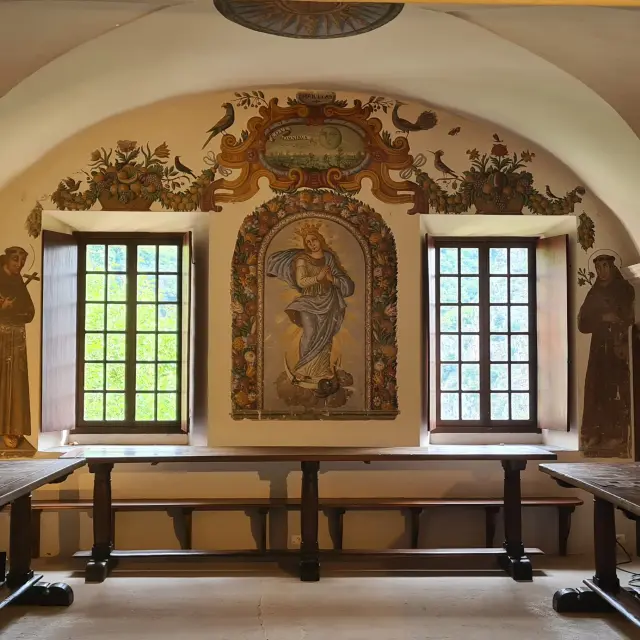
In the refectory, the 1667 frescoes illustrate the four Franciscan virtues (poverty, chastity, obedience, humility) through symbols and Latin maxims. One scene even celebrates the equality of all creatures, under a sun that “shines equally on all”.

Time suspended: the sundials, the symbolic heart of the monastery

The monastery has a total of eleven sundials, built between 1668 and 1880. Eight of them adorn the east, south and west façades of the cloister gallery. All are in the gnomonic style: a rod, the gnomon, casts its shadow and reveals the time. But they don’t all speak the same language! Some indicate “classical” time, othersItalic or Babylonian time (a system inherited from the ancient civilisations of the Mediterranean basin). A detail that testifies to the intellectual openness of the Franciscans, who were present on missions far beyond the Roya.

For the friars, these dials were not decorative. They punctuated the day: time for prayer, work, silence and meditation. At the monastery, time seems slow and almost circular… a far cry from our modern rush!

To combine business with pleasure,the aesthetics of the sundials are unique! Baroque finesse, with inscriptions, mottos and geometric lines adorning the walls. Don’t know how to read them yet? The guided tour will give you the keys to unlocking their secrets. That’s the spirit!

From Franciscan silence to contemporary creation

The Monastery of Saorge has traded prayer and manual labour for the words, drafts and ideas of budding and seasoned writers. Today, the walls that once heard the meditations of the brothers now welcome the voices of creative artists. Silence used to be spiritual; now it’s a source of inspiration!

From April to October, writers, translators, scriptwriters and music composers from all over the world take refuge in these ancient cells. The cloister becomes a place where new ideas are whispered. And the simple beauty of the monastery is sure to fuel these exchanges!

It has to be said that in Saorge, time is slow, the sky is blue, and the creators are happy. The rhythm of life (and work!) is dictated by daylight and the shadow of the sundials. A stroll through the steep streets of the village of Saorge, a glance towards the Roya valley… and your imagination is fed!

A mirror between past and present

Discipline, attention, calm… In the end, there is the same essence between the brothers of yesterday and the writers of today. The walls of the monastery, the cloister, the refectory and thechurch of Notre-Dame-des-Miracles are no longer just witnesses to the past, but veritable accomplices in today’s creative work.

Throughout the year, the monastery also plays host to cultural events, exhibitions and workshops, often linked to creations from writing and artistic residencies.

The Saorge Monastery: a sensory experience to be savoured

If the narrow streets of the village of Saorge gently immerse you in the atmosphere, the climb to the monastery is the highlight of the show. From here, the panorama opens up: the suspended village floats between sky and river, defying verticality. Your gaze plunges towards the Roya, which meanders below and rises towards the crests of the Mercantour.

The heart of the monastery is a veritable waltz for the senses. The coolness of the walls, the muffled sound of footsteps on the ancient flagstones, the light filtering through the narrow windows, the discreet scent of stone and wood all envelop you in a gentle atmosphere.

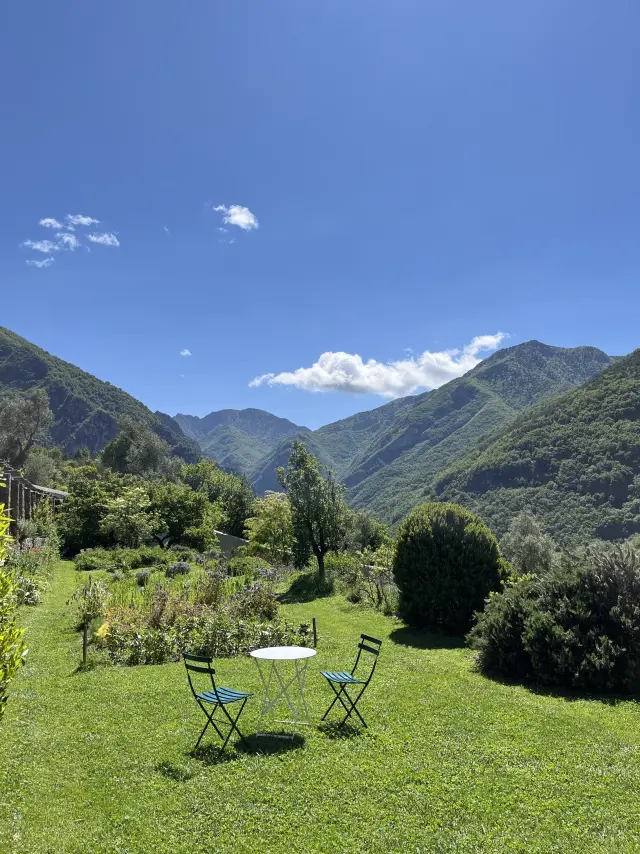
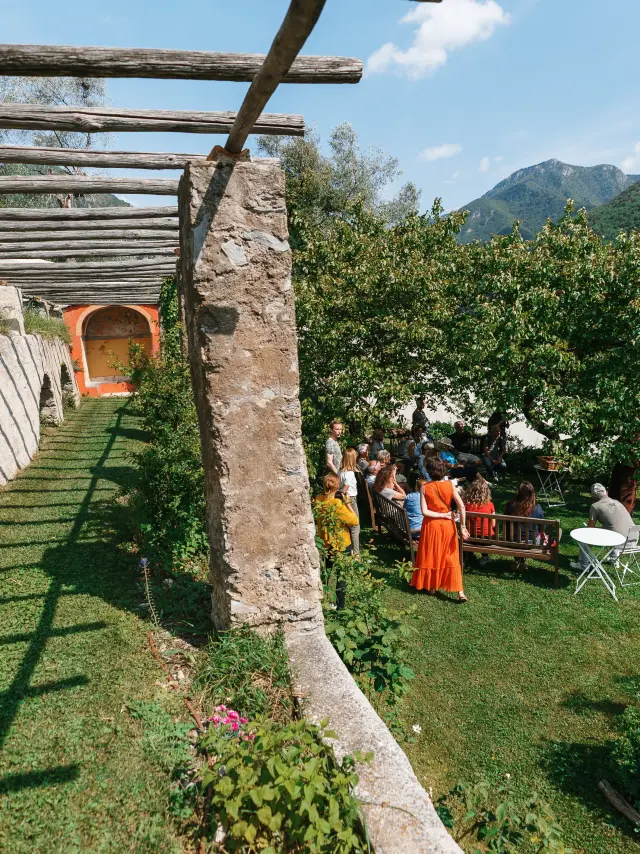
The terraced garden extends this sensory experience, with its vegetable garden, orchard, irrigation ponds, paths and other little nooks and crannies. Nature is carefully cultivated here, as the Franciscans have done for centuries. Gardeners from theJardins de la Roya association look after these areas, where vegetables, fruit and aromatic herbs thrive and provide food for the daily lives of every resident.

Discovering the place today: visits and cultural mediation

Today, the Saorge monastery is open to visitors, while retaining its atmosphere of calm and contemplation. Guided tours, included in the entrance ticket, take visitors through the rooms, cloister, church and garden, while learning about thehistory of the Franciscans and the residences of contemporary artists. The guides take the time to recount anecdotes and details of the frescoes and sundials. The past and present resonate in every room!

The site is designed to be accessible to all. Special features have been put in place, including a tactile model, Braille and thermoformed aids produced in collaboration with the Valentin Haüy association, tours adapted for the mentally impaired by prior arrangement, and LSF interpreters for groups on request.

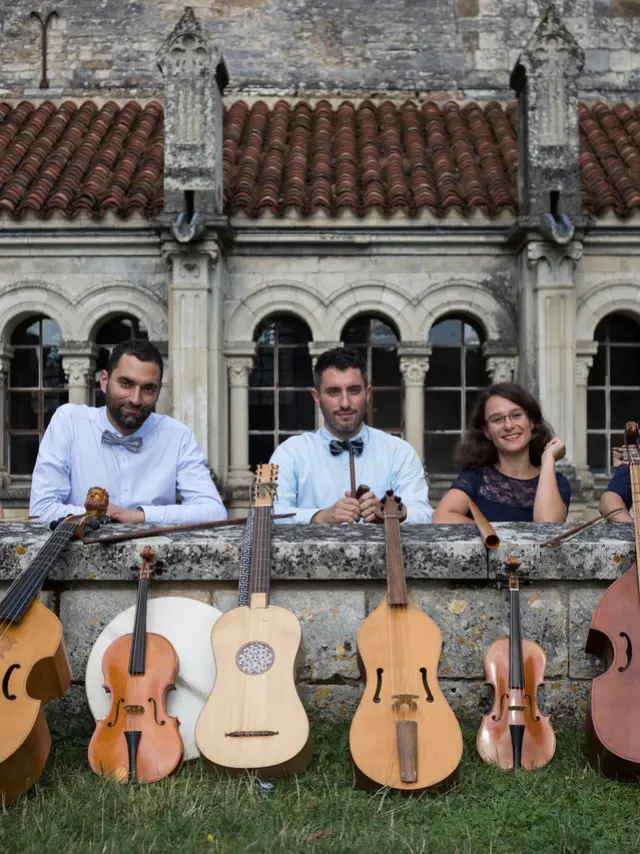
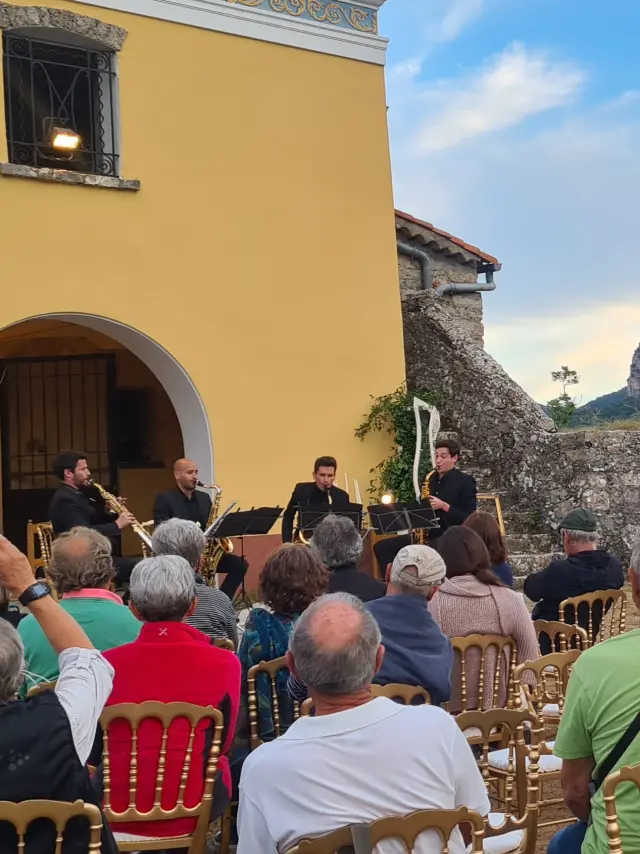
And every summer, the Monastère de Saorge is the setting for the Escapades Baroques, with experiential tours and unusual concerts and shows.

What you need to know before visiting the monastery

If you love this place and its peace and quiet, it also means respecting the silence, walking quietly up and down the staircases and corridors, and taking the time to observe every detail.

Frequently asked questions about the Monastère de Saorge

  • Where is the Monastère de Saorge?

    The Monastère de Saorge is located in south-east France, in the Alpes-Maritimes department, in the Provence-Alpes-Côte d’Azur region.

  • What are the different areas to discover at the Monastère de Saorge?

    Would you like a foretaste of your visit to the Monastère de Saorge? Here are the different areas you can explore during your visit:

    • The cloister
    • The former Franciscan cells
    • The church of Notre-Dame-des-Miracles
    • The refectory
    • The terraced garden
  • Who are the Franciscans?

    The Franciscans are Catholic religious belonging to a spiritual family founded in the XIIIᵉ century by Saint Francis of Assisi. Their ideal is based on poverty, simplicity, fraternity and a profound respect for nature.

  • Who is Saint Francis of Assisi?

    Born in Italy around 1181, Francis of Assisi chose to renounce wealth in order to live in poverty, close to the poor and to creation. In 1209, he founded the Order of Friars Minor.

  • What events take place at the Monastère de Saorge?

    At the Monastère de Saorge, you don’t just come for the architecture. There’s also a real cultural season: art exhibitions, concerts, meetings and workshops punctuate the year. And the writers in residence sometimes share their work with the public!

More stories to follow!